
Should Hardwood Floors Match Stairs, Railings, and Trim?
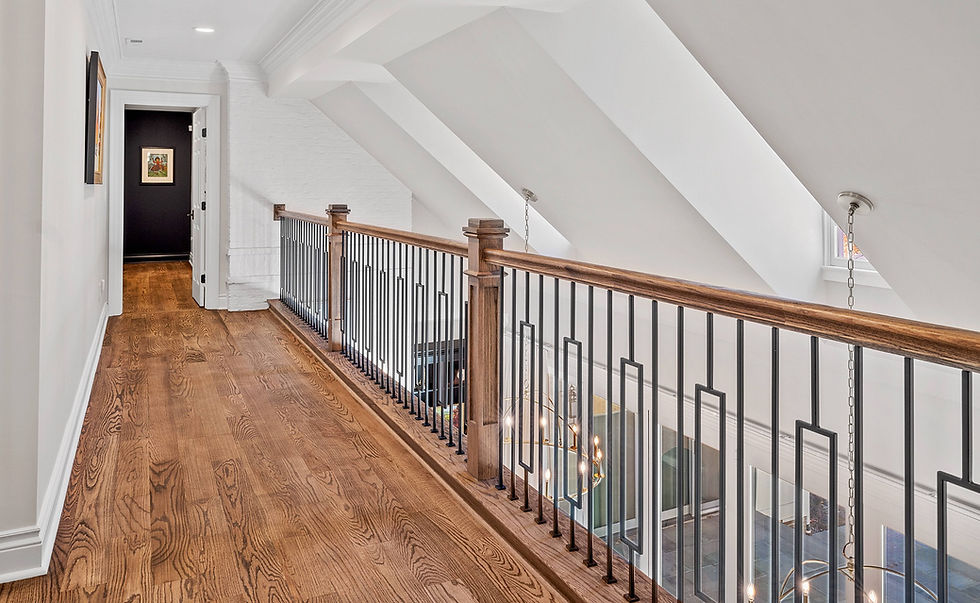
Should hardwood floors match stairs exactly? Not necessarily. A well-designed home can look cohesive when the floor, stair treads, handrails, newel posts, and trim share related undertones or visual weight, even when they are not the same color. In many rooms, a controlled contrast looks more natural than forcing every wood surface into one identical shade.
The important word is intentional. Wood species, grain, age, stain absorption, finish sheen, and lighting can all change how a color appears. Planning those relationships before installation helps the finished floor feel connected to the architecture instead of looking like a separate addition.
The Short Answer: Coordinate the Wood, but Do Not Force an Exact Match
Hardwood floors, stairs, railings, and trim do not have to be identical. They should look like they belong in the same design. That can mean a close match, a shared warm or cool undertone, or a deliberate contrast between lighter flooring and darker architectural woodwork.
An exact match is most realistic when the same material, stain system, preparation method, and finish are used at the same time. Even then, natural boards vary. When homeowners are coordinating new flooring with older stairs or trim, the goal is usually visual harmony rather than a promise that every surface will be indistinguishable.
What Should Coordinate Across Floors, Stairs, and Trim?
A cohesive result depends on several details working together:
Undertone: Warm, neutral, red, golden, brown, or cooler notes should relate to one another.
Color depth: The surfaces can differ in darkness, but the contrast should look deliberate.
Grain and character: Strong grain variation can influence how closely two stained surfaces appear to match.
Finish sheen: A matte floor and a glossier handrail can reflect light differently even when the stain colors are close.
Adjacent materials: Wall color, metal balusters, tile, cabinetry, and natural light affect how the wood tones read together.
Looking at these elements together is more useful than comparing two stain names on separate screens or small samples. The surrounding room changes the way the eye reads each surface.
When a Close Match Makes Sense
A close match can be the right direction when new flooring continues directly into stair treads or a landing, when an addition must blend with existing hardwood, or when the design calls for a quiet and continuous appearance. It can also help smaller connected spaces feel less visually divided.
Professional hardwood stain matching becomes important in these situations because the visible color depends on more than the stain label. The existing wood, its age, prior finish, sanding, preparation, and the way it accepts color all affect the result.
When Intentional Contrast Works Better
Contrast can give architectural woodwork more definition. A darker handrail can frame a lighter floor, while black metal balusters can create separation between nearby wood tones. Painted risers or trim can also keep the design from feeling overloaded with similar browns.
The contrast should repeat or connect to something else in the room. Hardware, lighting, window frames, furniture, or nearby finishes can help a darker or lighter element feel purposeful. A single unrelated wood tone is more likely to feel accidental than a contrast that appears in several places.
Why Wood Is Harder to Match Than Paint
Paint covers a surface with a relatively consistent color. Stain interacts with the wood below it. Species, grain direction, density, sanding, age, and previous coatings can all affect absorption and appearance. Two boards treated with the same stain may not finish as the same color.
Finish also changes the final look. Homeowners comparing floor finish options should consider how sheen and topcoat appearance will relate to stair parts and other woodwork, especially where daylight or decorative lighting reflects across both surfaces.
The Fair Oaks Estate Project Shows Coordination Without a Flat, One-Color Look
The featured Fair Oaks Estate photo shows warm-toned wood flooring along an upstairs landing beside substantial wood handrails and newel posts. Black metal balusters create a clear visual break, while white walls and ceilings keep the woodwork from overwhelming the space. The floor and railing feel related without reading as one flat, identical color.
The project documentation does not identify the wood species, flooring product, stain formula, or finish sheen, so none of those details are assigned here. The image is used only to discuss the visible relationship between the floor, railing, metalwork, and surrounding architecture. Photo: Vaus Media. Interior design: ID.ology Interiors & Design. Builder: Living Stone Design + Build.
Plan the Flooring and Stair Details Together
A flooring decision can affect more than the main room. At a stair opening or landing, the installer may need to account for stair nosing, tread depth, risers, railing bases, newel posts, transitions, and the direction of the floorboards. Those details are easier to coordinate before materials and colors are finalized.
Homeowners planning new or updated stairs can discuss how hardwood stair installation will connect with the surrounding floor and architectural woodwork. That conversation should include both the visible design and the construction details at the landing.
Matching New Hardwood to Existing Woodwork
Existing floors, handrails, trim, and cabinets have already been exposed to light, cleaning products, wear, and age. A small sample viewed away from the room may not reveal how a new floor will compare after installation. Whenever possible, evaluate larger samples next to the actual surfaces in both daylight and evening light.
The installation plan matters too. Professional hardwood floor installation should account for the product, subfloor, room layout, transitions, stair connections, and finish details as one coordinated scope rather than treating the color decision in isolation.
Questions to Ask Before Approving the Final Combination
Before choosing the flooring, stain, or finish, ask:
Which surfaces need a close match, and which can use intentional contrast?
Do the floor, stairs, railing, and trim share compatible undertones?
Will the grain and natural variation make one surface appear busier than another?
How will the finish sheen change the color under natural and artificial light?
Where will the most visible transitions occur?
Can samples be viewed beside the existing woodwork in the actual room?
Are the floor, stair, railing, and finishing details included in one written scope?
These questions help separate a thoughtful coordinated design from a decision based only on a small color chip or product photo.
Local Showroom Guidance Can Reduce Guesswork
Homeowners comparing hardwood flooring in Asheville can bring photos of their stairs, trim, cabinets, and natural lighting to a showroom conversation. Seeing flooring samples beside those references can reveal undertones and contrast that are difficult to judge online.
Frequently Asked Questions
Do hardwood floors need to match stairs?
No. They should coordinate, but they can use different color depths or finishes when the contrast is intentional and connected to the rest of the room.
Should handrails match hardwood floors?
Handrails can match closely, share an undertone, or provide a deliberate darker or lighter contrast. The right choice depends on the stairs, metalwork, trim, lighting, and overall design.
Can stair railings be darker than the floor?
Yes. A darker railing can frame the stair opening and add definition, especially when the darker tone relates to balusters, hardware, lighting, or other details.
Why does the same stain look different on two pieces of wood?
Different wood, grain, sanding, age, porosity, prior coatings, and lighting can change how stain is absorbed and perceived. A stain name alone does not guarantee an identical result.
Can new hardwood be matched exactly to existing wood?
A professional may be able to create a close visual match, but natural variation and the age of the existing surface can make an exact guarantee unrealistic. Samples and an on-site evaluation provide better guidance.
Aim for a Cohesive Home, Not a Forced One-Color Match
Hardwood floors, stairs, railings, and trim can feel connected without being identical. Coordinated undertones, balanced color depth, compatible sheen, and repeated contrast usually matter more than copying one stain across every surface. Planning the details together gives the flooring and architecture room to complement each other.
Ready to compare flooring and woodwork for your home? Book a showroom consultation with Blue Ridge Floors or call the Asheville showroom at 828-280-3221. If you are planning installation or stain work, you can also request a free flooring estimate.
Understanding how to become a BIM manager involves more than software knowledge, with communication, project coordination, information control, and industry experience also being important. Professional courses from the College of Contract Management can support BIM career development.